Predictive Maintenance Without a Data Team
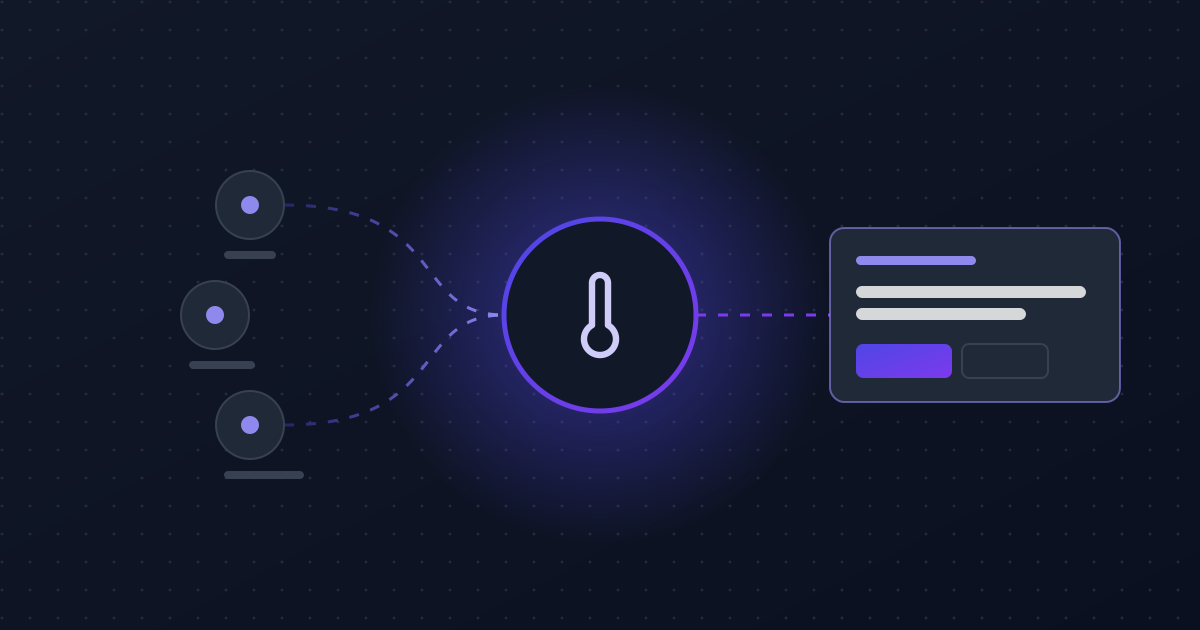
Machines rarely fail without warning. The warning is just spread across a power meter, a vibration sensor, a service log and the weather forecast. Feathergrid reads them together.
Equipment almost never fails out of nowhere. A pump that dies on Friday was usually telling you something on Monday. The trouble is that it was telling three different systems, and none of them was listening to the others.
Predictive maintenance is supposed to fix that. In practice, it often means a dashboard full of sensor charts that somebody has to read, interpret and act on. Most operations teams don't have that somebody.
Fine alone. Loud together.
Here are three readings from one pump:
- It draws a little more power every week. Not much. Still within spec.
- Its vibration ticks up for a few minutes after each restart, then settles.
- A heat wave is forecast for Friday.
Each one is fine on its own. A power meter won't alarm on a small drift. A vibration sensor won't alarm on a brief spike. A forecast is just a forecast.
Together, they describe a pump that's working harder, wearing faster, and about to face its heaviest load of the year. That's a failure on the hottest day of the week, when a callout costs the most and a breakdown hurts the most.
What Feathergrid connects
Feathergrid works on top of what you already have. Nothing moves and nothing gets replaced.
- Sensors: vibration, temperature, power draw and run hours on each machine.
- Systems: your maintenance and work-order system.
- Data: each machine's service and failure history.
- External APIs: weather and heat forecasts.
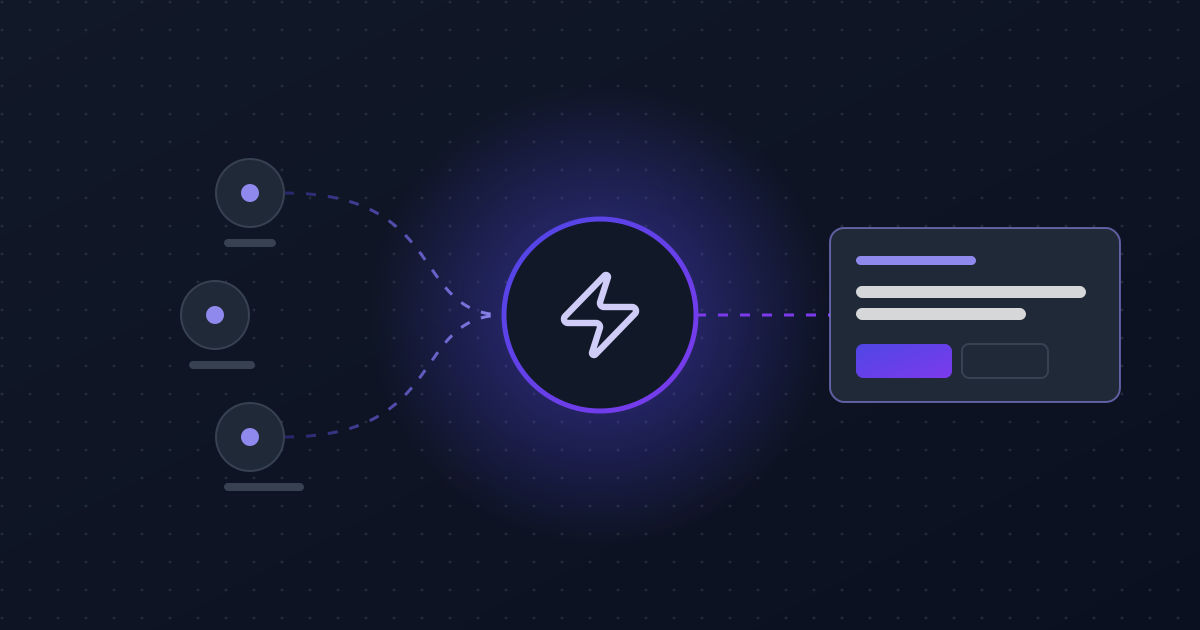
It finds what's related across those sources. A small power drift on a machine that was just serviced is normal. The same drift on a machine that's overdue, ahead of a heat wave, is a pattern worth acting on.
The trouble is that it was telling three different systems, and none of them was listening to the others.
How it plays out
Here's an example.
On Monday morning, Feathergrid sees the three readings line up. It flags the pump and recommends a service visit before Thursday, with the readings behind it: the power trend, the restart vibration, the service history and the forecast.
The maintenance lead gets it by text or email, checks the reasons, and approves. A work order goes in. The pump gets a bearing replaced on Tuesday, during a quiet shift, at normal rates.
Friday comes and goes. Nothing breaks.
A person stays in charge
Feathergrid recommends. Your team decides.
- Every recommendation lists what's behind it, so a technician can check it against what they know about the machine.
- You set the rules for which recommendations run on their own, like opening a routine work order, and which wait for a person.
- One switch stops all automated actions.
- Every decision goes into a tamper-evident record, which helps with warranty claims, insurance and audits.
Customer data is processed in the US and never used to train AI models.
Where to start
Pick the machines whose failure costs you the most: the pump that floods a basement, the compressor that spoils inventory, the generator that keeps a site running. Connect the maintenance system you already use and the sensors on those machines, and let Feathergrid learn what normal looks like for each one.
See the field equipment use case, or book a scoping call.
Topics