Cold Chain Monitoring That Sees the Whole Trip
A warm trailer, a traffic jam and a dock that closes at five are each fine on their own. Together they are a rejected load. Here is how Feathergrid connects them in time to act.
Most cold chain monitoring does one job. A logger in the trailer records the temperature, and if it crosses a line, someone gets an alert. That's useful. It's also late.
By the time the threshold trips, the load is already at risk. Worse, the logger has no idea what else is going on: where the truck is, how long until it reaches the dock, or whether anyone will be there to receive it.
The problem isn't missing data. It's that the data lives in five places and nobody is looking at all of them at once.
Fine alone. Loud together.
Take three facts on a Tuesday afternoon:
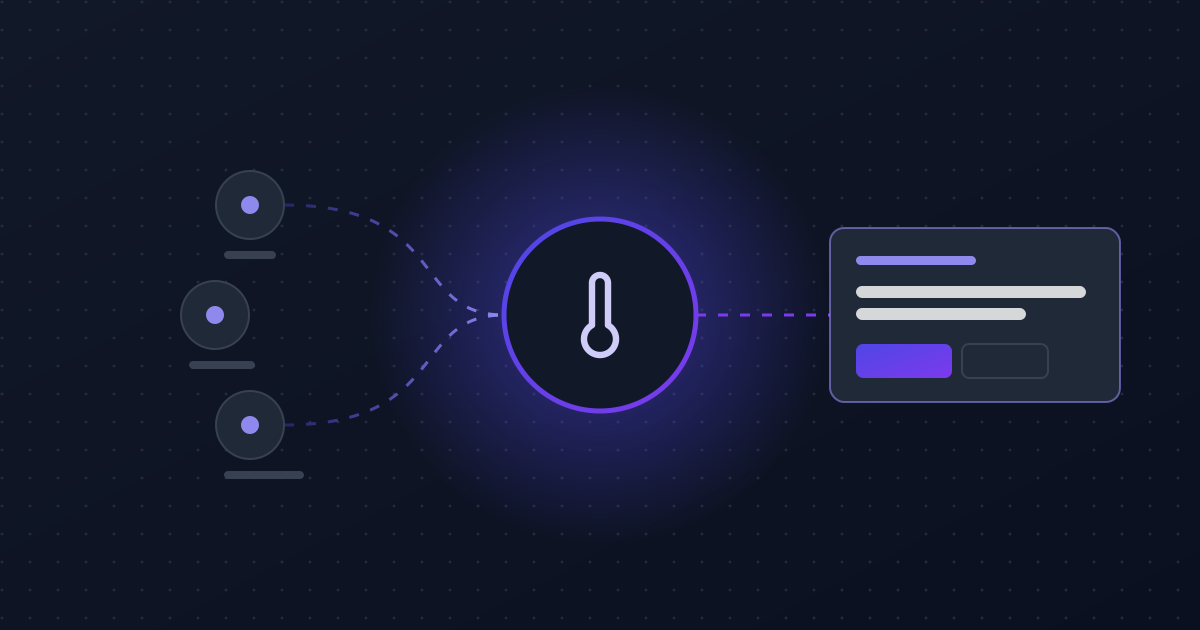
- A refrigerated trailer is running two degrees warmer than usual. Still inside the safe range.
- That trailer is stuck in traffic, 40 minutes from the receiving dock.
- The receiving crew at that dock clocks out at five.
None of these is an emergency. A temperature logger wouldn't alert. The traffic app shows a delay, not a crisis. The dock schedule is just a schedule.
Together, they're a rejected load. The trailer arrives late and warm, there's no one to unload it, and it sits until morning.
Feathergrid's job is to notice that while there's still time to do something about it.
What Feathergrid connects
Feathergrid works with the systems and devices you already run. Nothing gets migrated or replaced.
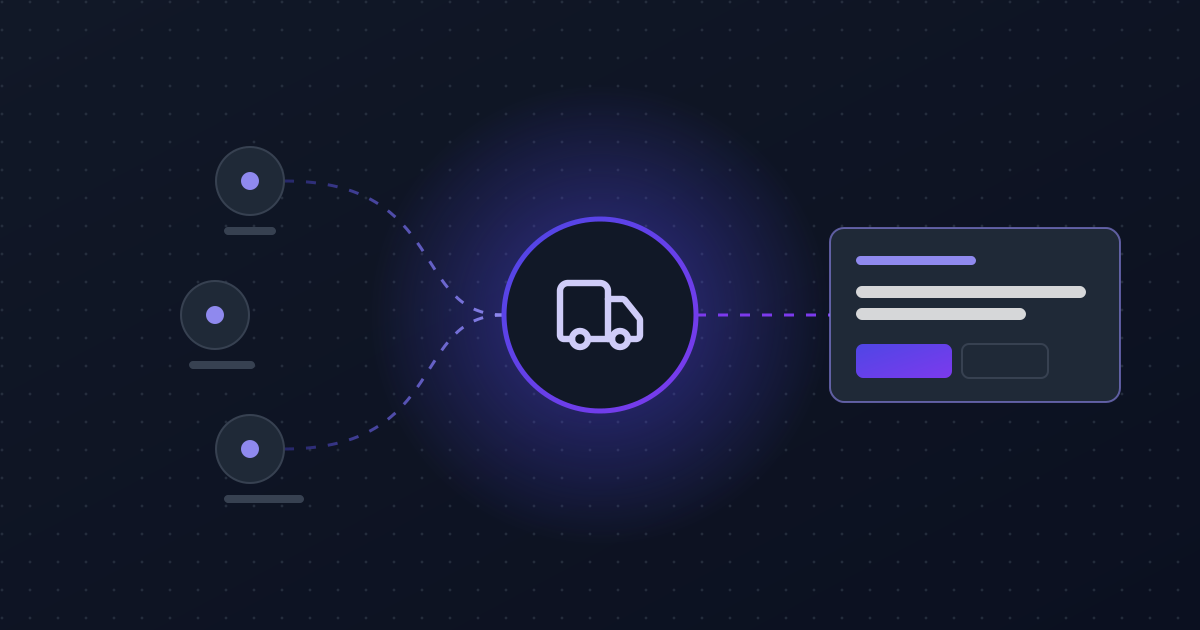
- Sensors: GPS trackers and temperature loggers in trucks and trailers.
- Systems: order, warehouse and shipping systems, including dock and crew schedules.
- Data: each supplier's and each route's on-time history.
- External APIs: live traffic and weather.
The value comes from reading them together. A two-degree drift means little on a trailer that's ten minutes out with a crew waiting. It means a lot on one that's stuck in traffic with the dock about to close.
A logger in the trailer records the temperature, and if it crosses a line, someone gets an alert.
How it plays out
Here's an example of how that Tuesday could go.
At 3:10, Feathergrid sees the three facts line up. It flags the load and recommends rerouting the trailer to a nearer dock that's open until seven. The recommendation comes with its reasons: the temperature trend, the traffic delay, and the crew schedule at both docks.
The dispatcher gets it by text or email, checks the reasons, and approves the reroute. The load arrives cold, on time, at a dock with people on it.
If the same pattern shows up often, the team can set a rule so routine reroutes go ahead on their own, and save their attention for the unusual ones.
A person stays in charge
Feathergrid recommends. Your team decides.
- Every recommendation shows its reasons, so a dispatcher can check the logic before acting.
- You set the rules for what runs automatically and what waits for a person.
- One switch stops all automated actions.
- Every decision goes into a tamper-evident record: what was recommended, who approved it, and what happened next. That record is useful when a customer or an auditor asks what happened to a load.
Customer data is processed in the US and never used to train AI models.
Where to start
Start with one lane or one customer where a lost load hurts. Connect the trackers and loggers you already have, the shipping system, and the traffic feed, and see what Feathergrid catches in the first few weeks.
See the logistics use case, or book a scoping call.
Topics